
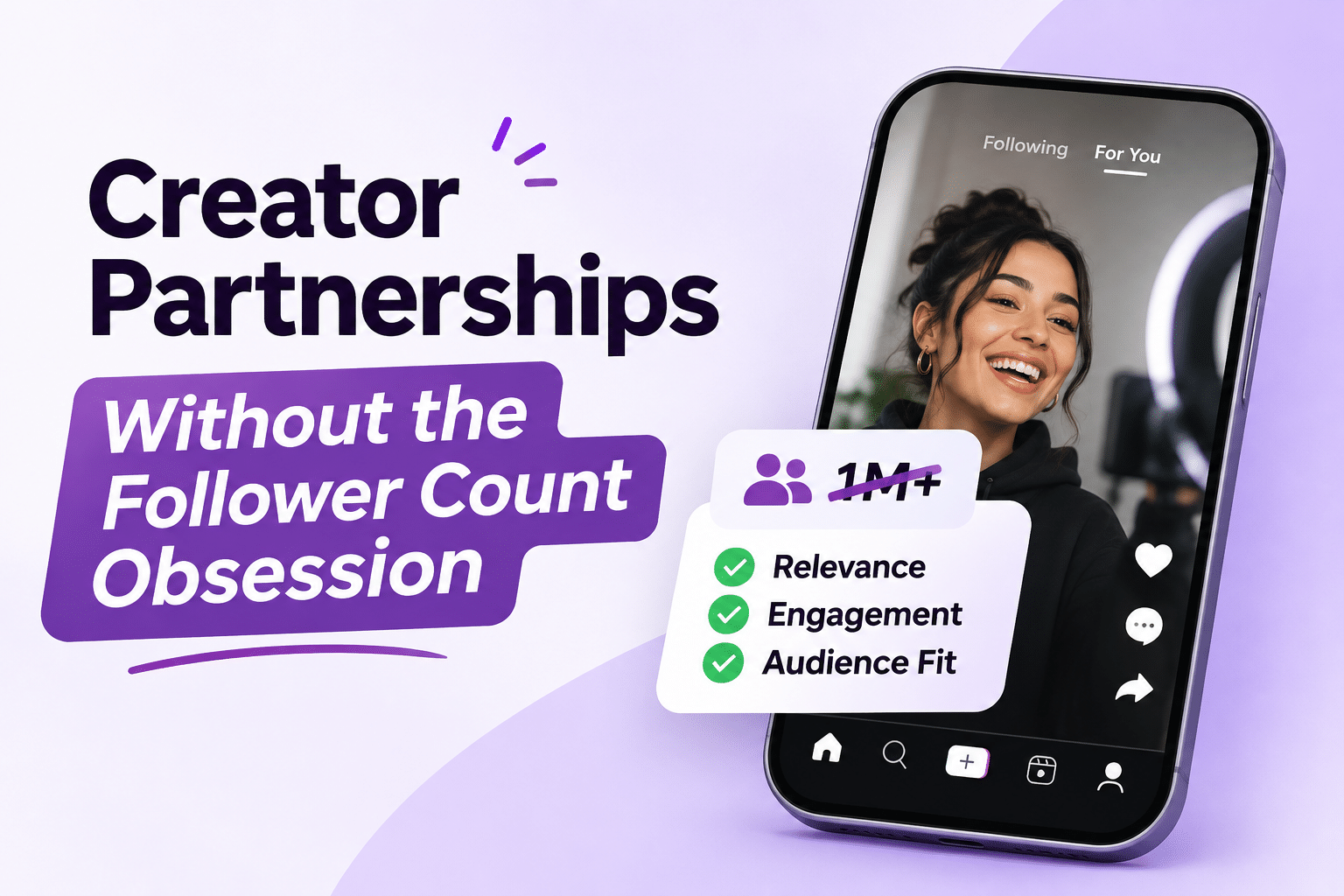
A creator with a large following can look very appealing. Before you reach for the marketing budget, it is worth finding out whether those followers are likely to become your customers. A restaurant in regional Victoria needs a different audience from a product available for delivery across Australia.
IAB Australia’s Creator Connect research, released in September 2026, describes creators as a discovery channel encountered by six in ten Australian shoppers before purchasing. The report also emphasises the importance of context, authenticity and brand fit. [1]
Start with the people you want to reach and the story you want them to understand. The follower count can wait its turn.
Look beyond the follower count
Review where the audience lives, what interests them and how they respond to previous content. Ask for recent audience and performance information that is relevant to your campaign.
Read the comments as well as the headline numbers. Are people asking about the experience or product? Does the creator respond thoughtfully? Would your business fit naturally into their usual content? A page full of fire emojis tells you people found the emoji button, but you will need more information to assess the audience.
A small local audience may be valuable for a suburban venue. A specialist audience may be more suitable for a technical product. Choose according to the customer you need to reach.
Example one: A restaurant collaboration
A restaurant could invite a local food creator to document a dining experience. The brief might ask them to explain the location, show agreed dishes and describe practical booking information, while leaving room for their own honest presentation.
Give the creator a dedicated booking link so you can follow the response. Also agree whether you can reuse the content. Falling in love with a video and then discovering you cannot run it as an ad is an avoidable disappointment.
Example two: A live music event
A promoter could partner with a creator whose audience regularly attends the relevant genre of music. Content could include an artist interview, a venue preview or a practical guide to attending.
A tracked ticket link would provide one measure of response. The team could also review meaningful comments and questions to understand whether the event reached suitable potential attendees.
Example three: A home improvement brand
A retailer could work with a renovation creator to demonstrate a product in a suitable project. The content could explain dimensions, installation considerations and the finished appearance, using verified product information.
The demonstration could answer the questions a showroom customer would ask: how big is it, how does it work and what will it look like in my home? Useful detail gives people a reason to visit the product page.
Agree on the details before production
Document the deliverables, timing, payment or other benefit, approval process and reporting. Agree how the commercial relationship will be clearly communicated. Establish permissions for reuse, including any paid advertising, rather than assuming they are included.
Start with a manageable collaboration and a clear brief. Give the creator room to speak in their own voice, then assess the response against the goal you agreed on. You are building a working relationship, so clear expectations help everyone.
Your starting checklist
- Define the audience and business outcome.
- Shortlist creators with relevant content and audience locations.
- Agree on deliverables, commercial disclosure and usage rights.
- Set up a suitable tracking link or booking method.
- Assess costs alongside response quality and business outcomes.
Reach can help you choose a suitable creator, shape the brief and plan how to measure the response. Get in touch with Reach to explore a collaboration that makes sense for your customers and your budget.
References
iAB Australia, Creator Connect Report 2026, 17 September 2026. View source
.

LATEST NEWS
MaasSEO article for this page has not been added yet. Please add an article to see it here.