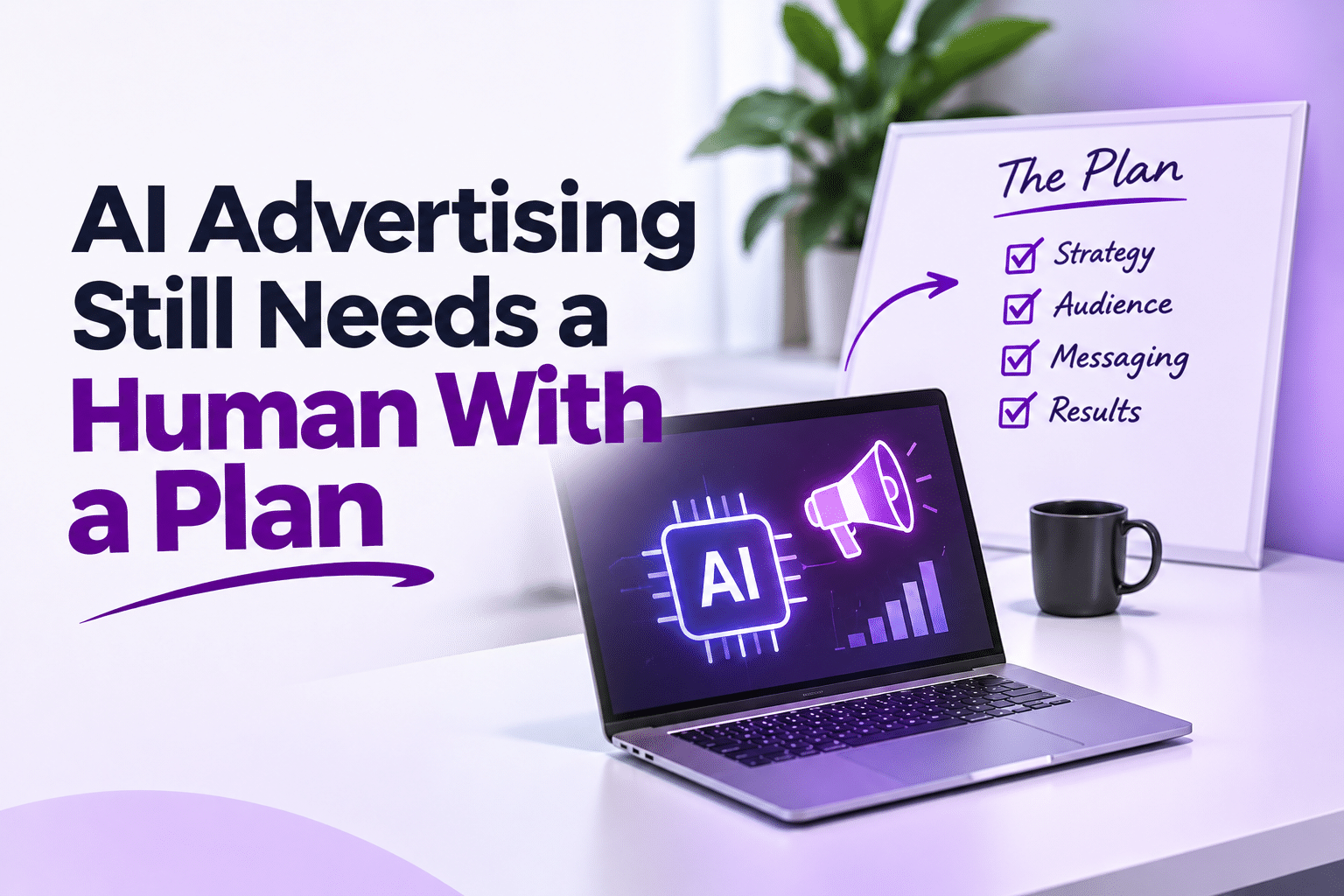
AI can help advertising platforms match searches, create messages and choose landing pages. It still needs a clear idea of what your business is trying to achieve. “More leads” sounds reasonable until your team spends Monday explaining that you don’t offer that service, in that suburb, for that price.
Google’s April 2026 AI Max announcement described new ways for advertisers to guide messaging and matching, alongside expansion into Shopping and travel formats. [1] Its May announcement also outlined tests of conversational advertising and an expanded Direct Offers pilot. [2] Access to particular features depends on rollout, market and account eligibility.
Tell the system what a useful outcome looks like
Start by deciding what a good enquiry looks like. A completed form is useful to count, but your team knows there is a difference between an ideal project enquiry and someone trying to sell you printer toner. Choose the actions that genuinely help you assess the campaign.
For a service business, that could include qualified enquiries or booked consultations where supported by the platform and tracking setup. For a retailer, it could be completed purchases with reliable order values.
Check the information going into your reporting before leaning harder on automation. Duplicate events, missing purchase values and confusing landing pages make it difficult to judge what is working. A little housekeeping here is usually time well spent.
Example one: A commercial door business
Imagine a company that works on commercial door projects within a defined area. A campaign attracting residential enquiries outside that area could generate impressive lead numbers while consuming staff time.
The business could explain its commercial services clearly on the landing page, review location settings and use available exclusions. Record which enquiries fit the work the company actually does. That gives the team a better basis for deciding whether the campaign deserves more budget.
Example two: An online retailer
A retailer could check product titles, stock availability, prices and specifications in its product feed. Landing pages should make the same information easy for shoppers to find.
Before testing additional automated features, the retailer could verify purchase tracking and revenue values. Results should be considered alongside margin and fulfilment costs when deciding what is commercially worthwhile.
Example three: An event campaign
A promoter could use completed ticket purchases as the primary campaign outcome where reliable tracking is available. Ad variations could introduce the artist, show the performance experience or answer practical attendance questions.
Send people straight to the relevant event page and make buying straightforward. If someone is ready to book, this is a good moment to let them, rather than sending them on a tour of the website. Check actual ticket purchases alongside the clicks.
Test changes in a controlled way
Use experiments where available. Establish a baseline, a defined budget and enough time to observe the normal purchase cycle. Avoid changing targeting, creative and conversion definitions together if you need to understand what caused a difference.
Keep checking spend, relevance and actual outcomes. Review platform recommendations with your business goals in mind. The platform doesn’t attend your Monday morning sales meeting, so someone who understands the business still needs to make the call.
Your starting checklist
- Define the conversions that matter commercially.
- Test tracking and review data quality.
- Improve landing pages and relevant product information.
- Check controls, exclusions and feature eligibility.
- Evaluate a bounded test before expanding investment.
Reach can review your ads, tracking and landing pages, then help you work out where automation is useful and what needs attention first. Talk to Reach about an advertising plan with clear goals and someone checking the results.
Contact Reach Marketing Group for training or our services.
References
[1] Google Ads and Commerce Blog, AI Max Turns 1 with new ways to steer performance and expansion to more advertisers, 30 April 2026. View source
[2] Google Ads and Commerce Blog, A new generation of ads for the AI era of Search, 20 May 2026. View source
.

LATEST NEWS
MaasSEO article for this page has not been added yet. Please add an article to see it here.